Source first
See the concepts and facts recovered from each upload.
 Carrel
Make the material you have count.
Turn the slides, notes, and photos already in front of you into source-grounded practice and a clear next move.
Lecture 06.pdf
32 pages · source reviewed
SOURCE
Retrieval strengthens access to information over time.
PRACTICE
Why is retrieval more useful than rereading alone?
Answer from memory, then check the source.
One course keeps the source, the study tools, and what to revisit together.
A shorter path to studying
The material stays yours. Carrel helps turn it into something you can actively use.
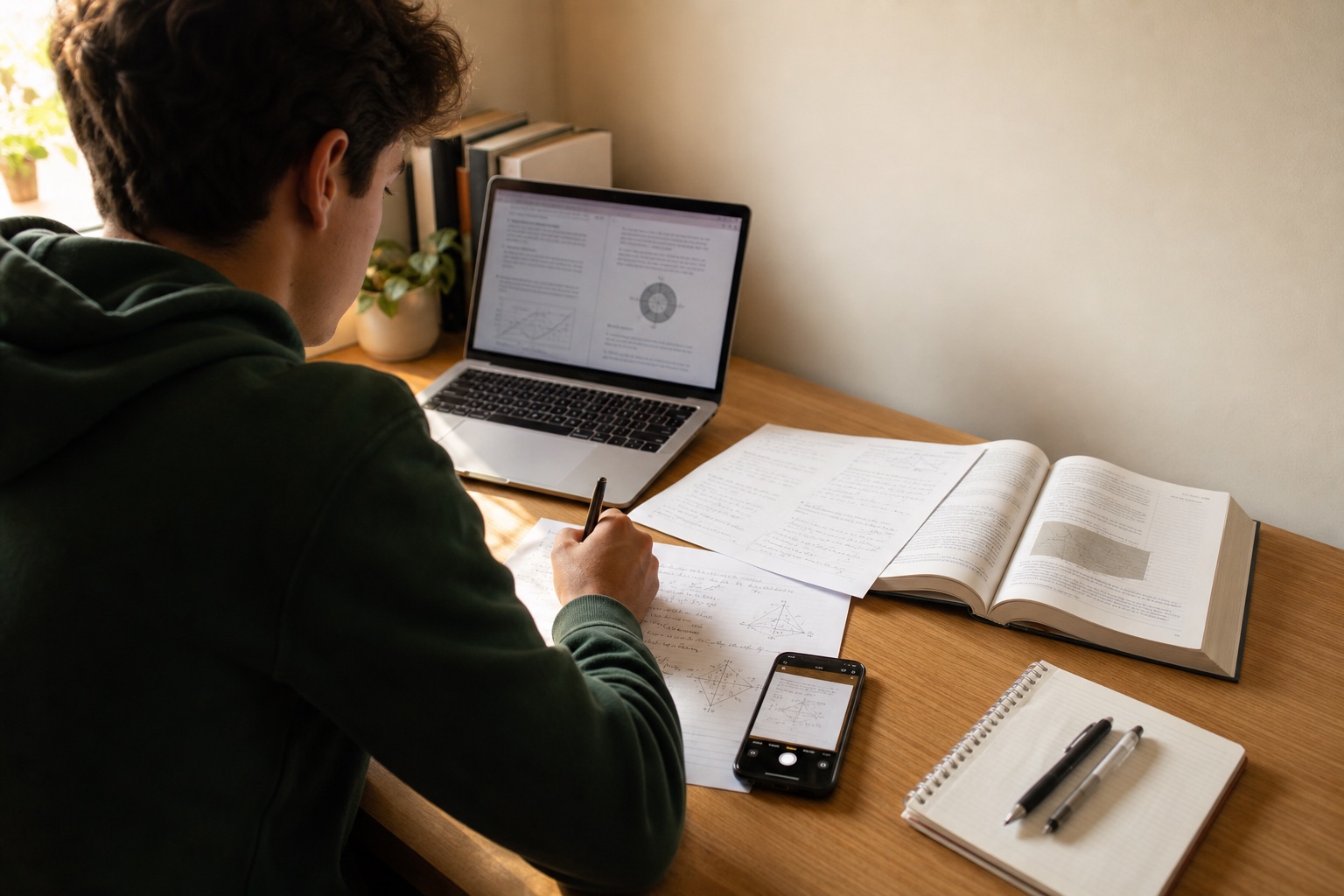
Add a PDF, slide deck, document, set of notes, or a quick photo from class.
Review what Carrel understood before you build practice from it.
Practice now, then return to the concepts your work says need attention.
Show the receipt
Every useful study tool starts with an inspectable source. Review the extraction, correct it, and choose what belongs in the next session.
See the concepts and facts recovered from each upload.
Connect questions and explanations back to the material.
Change the format or tailor the next version when a method is not helping.
One source. More ways in.
Start with the method that fits the moment. If it is not helping, switch while keeping the same reviewed source underneath.
Test recall with explanations and evidence from the material you uploaded.
Keep useful facts in review without rebuilding a deck by hand.
Turn a dense source into structured notes without losing where it came from.
Use missed questions and overdue cards to decide what deserves another pass.
The part that improves with you
Missed questions, confidence, and spaced-review lapses help Carrel point you toward the concepts worth revisiting.
Tonight's next move
Memory & learning · 8 minutes
FOCUS TOPIC
Two recent misses and four cards due. Start with a short mixed review.
WHY THIS
Based on your study history